top of page

ALPHA RESPONSE
LEVEL DESIGNER / ENVIRONMENT ARTIST
MAKING A MEMORABLE IMPACT
Alpha Response is a first person tactical open world shooter developed by Cold Forged Studios, delivers intense police action in dynamic, real-world environments. Where you can fight solo or with friends against diverse enemies in high-stakes missions that demand fast reflexes, teamwork and split-second decision making.
Hired by Gooseman, creator of the original Counter-Strike mod, and my Creative Director on Alpha Response. We worked side-by-side, with a few other in house team members, and a number of outsourced artists to create missions in the open world. I was hired because I had multiple skill sets with Level Design and Environment Art, and raw talent for creating games, with nothing but an interest to take on new tasks and learn new things.
A large amount of assets were from the Unreal Engine marketplace. A part of my role was being able to edit and optimize any of these assets on the fly, to be able to work with any area of the level or mission that I was tasked to complete. We had a limited amount of people, so having a Level Designer on the team with an art background was very useful towards the development of the project. I also improved my technical skills, allowing me to create some modular assets and tools using blueprints.
This also jump-started my interest into developing my own games, and inspired me to farther my programming skills. I originally learned C# for Unity, but with little interest in that, using Blueprints was a gateway to C++. I immediately see myself improving everyday and can't wait for the next opportunities to allow my skills to shine.
RESPONSIBILITIES
LEVEL DESIGN | MISSION DESIGN | TECHNICAL ART
DESIGNED MISSIONS AND AREAS
Programmers made tools for placing mission actors which sped up mission design and made it really quick for me, tools were also made to easily place props and vehicles for cover locations. Each mission for every major area was specified through tags (ie. M9, M10, etc.), allowing us to load in these levels when that mission was active. I worked on over 20 of these missions, 16 of them created by me, 5 of them being complete interior missions, which started in buildings that were un-enterable. I gathered references, designed mission and interior layouts, modelled the interiors, placed mission actors, set dressed the scenes, created variations of materials, and did interior lighting. I also fixed any asset errors along the way (geometry, uv's, textures, etc.) so they worked cohesively with our tools and pipelines.
-
VIP Escort Missions
-
Hostage Rescue Missions
-
Cash Protecting Missions
-
Bomb Defuse Missions
ADDITIONAL CONTRIBUTIONS
-
Asset Optimization and Bug Reporting
-
Created Modular Stair Railings
-
Created Modular Sign Blueprints
-
UI / UX and Grammar Improvements
-
Character Movement and Gunplay Feedback
HOTEL A

1/16
BACKSTORY & INTENT
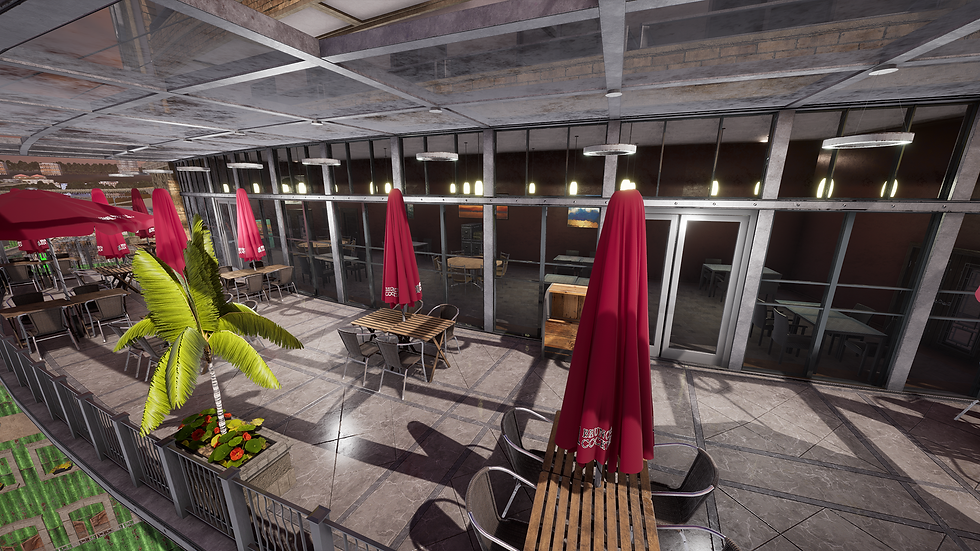
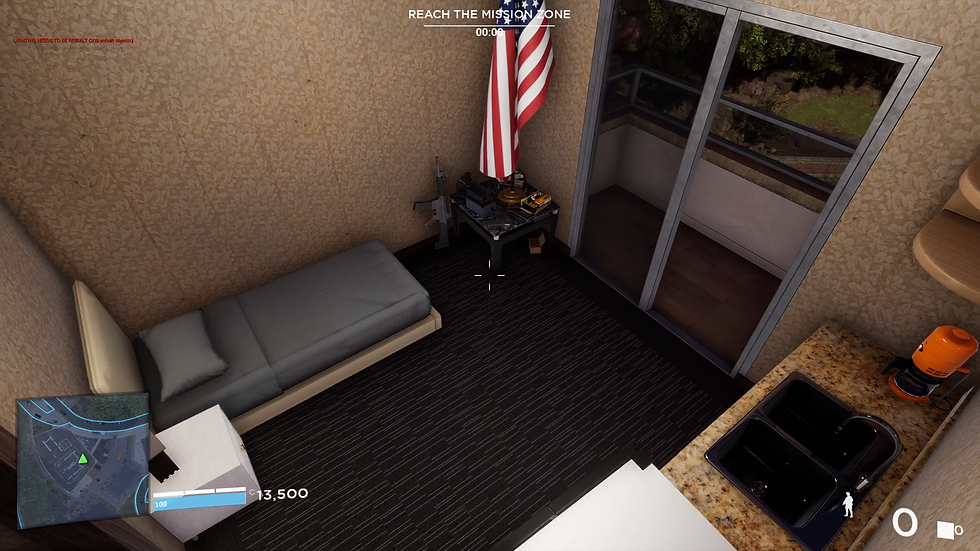
This hotel was part of the south side of our world, and at the time we had little missions throughout the south side. I was tasked to create an interior for the hotel, allowing us to create multiple unique missions inside it. We planned to have VIP Escort missions leading players to these more dynamic interior missions, which were more challenging than other missions throughout the city.
The intent for this area was to create an space that required strategic thinking, and provided elevation during the missions. Each mission slightly changes the area, spawning in new props, new enemies, and new objectives, so the player would really have to be on their toes, and ready at all times in order to complete their objective in time.
APPROACH
I needed to make sure the building had enough space for a large mission in the lower floors, and a large mission in the upper floors, explorable areas within each room, balconies that AI and the player can mantle over, and a vista view for players to get a sight on their next objective location. This area had an awesome view overlooking the river and city buildings, inside the hotel, had space for a few floors, and the balconies allowing for some cool fire fights. My plan was to have an elevator, and stairs accessible from each side of the lobby since it was quite large. Also, the upper floors and a restaurant to be accessible from both sides, with a nice windowed lobby to bring in light from outside.
That all being said, each floor above the lobby had slightly different layouts, the higher the floor, the bigger the rooms would get, containing a larger penthouse suite on the upper floor. I made a restaurant on the backside of the second floor, and later decided to open up the outer wall and create the large patio balcony. Inside had a total of 7 floors and the roof was also accessible. I was in the process of adding more props to the rooms, tuning the lighting and materials, and finishing missions inside the hotel. I created a Bomb Defuse mission on the lower floors, the smaller rooms allowed for nice cover areas when defusing bombs. I was in the process of creating a Hostage Rescue mission on the upper floors.
CHALLENGES
One of my biggest challenges in these types of spaces is to not make them to cramped and small, but still providing lots of good cover. When creating from reference, and based off someone elses exterior model, it was sometimes hard to gauge proper scale. For this, I do lots of planning and measurements before I model anything; using Photoshop, Maya and Unreal Engine together I need to make sure scale is correct, especially when lots of parts in hotels can be seen up close in first person games like this.
As a game developer, but also a avid player of FPS titles it can be frustrating getting stuck in a small space during a fire fight. But, it can also be irritating when parts of a realistic environment don't make sense. Getting room size and layout was important to me when balancing interior spaces while still having gameplay at the top of my priority. Another challenge in these large buildings is lighting, many large buildings like hotels have extravagant lights, and lots of them. Light sources can get costly, so containing a happy medium between aesthetic and performance is always a time consuming part of my level design process, especially in open world environments. But a very satisfying and enjoyable part of the work itself to see if all come together.
HOTEL B

in game footage
in game footage
1/30
BACKSTORY & INTENT
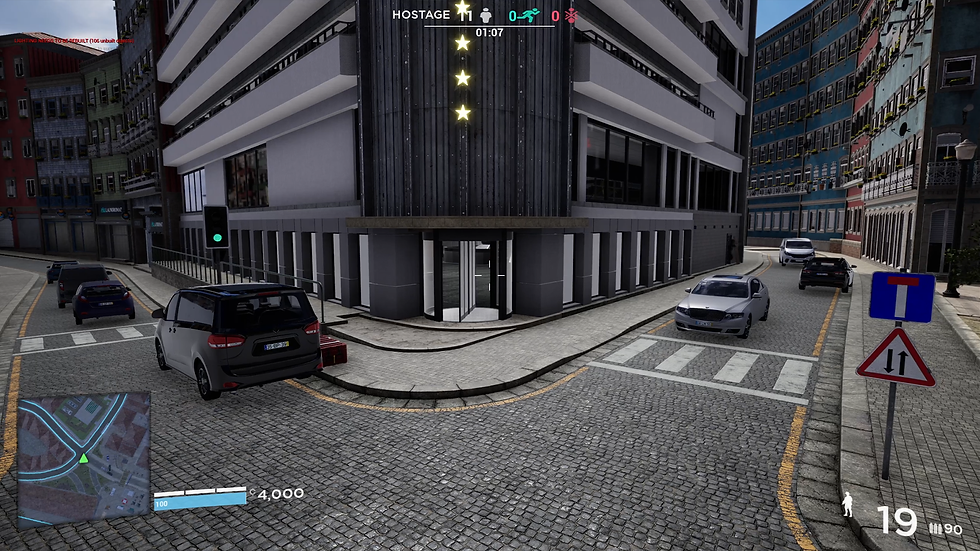
This hotel is one of the main landmarks in the east side, its a hub for civilians coming from the train station, because its right up the hill. The goal was to have a large interior for Bomb Defuse and Hostage Rescue missions, allowing players to get off the streets for a while.
My intent was to have a large area in the lobby for one mission, and mutliple floors leading up to the roof for a second mission. I also aimed to challenge the player in this interior mission, placing less objectives within the hotel than some missions, but more enemies to try and stop you in your path.
APPROACH
I approached this interior with way more confidence, the exterior was more modular to work with than other buildings I had worked on. I did not need to make every room accessible like some other interiors, but I needed to make a good layout that encapsulated gamplay as best I could. To do this I created lots of my own models, like planter boxes, stairs, and counter tops. I made sure the models were just the right height for the player to crouch beneath, and spread them throughout the hotel. This gave me lots of cover areas and by keeping the ceilings high, and the lobby open, it provided good vision where needed.
Each piece of the hotel exterior was an instanced mesh so I could easily modify it in any way I needed to, to improve my interior layout. No rooms above the third floor were made accessible accept for the roof. But, each floor leading up to the roof has an open concept with high ceilings in the hallways allowing for good lines of sight to floors above and below, with a moderate amount of cover.
CHALLENGES
Challenges for this large hotel were minimal compared to other interiors I had worked on, mainly because this building was more modular when originally created by the artists, making iteration and replacing certain parts of the building really quick and easy. One main challenge I had was filling the space correctly for gameplay, but also keeping the space open like some large hotels. I designed this interior to present a fancier and more modern side of hotels in the city, providing amenities like an arcade, gym, conference room, restaurant, pool, and a nice rooftop lounge.
Another challenge was having the ceilings high enough, but also lining them up with the existing outside windows, and balcony doors. Given the original shape of the hotel, it was never meant to be made with an interior, so that was never taken into consideration and it was something I had to figure out how to fix. Lastly, stairs, they are always a challenge in buildings with odd shapes, so with buildings like this, I typically start with the stairwell and elevator, and plan my layout around it.
BANK


during the interior process
in game footage
1/16
BACKSTORY & INTENT
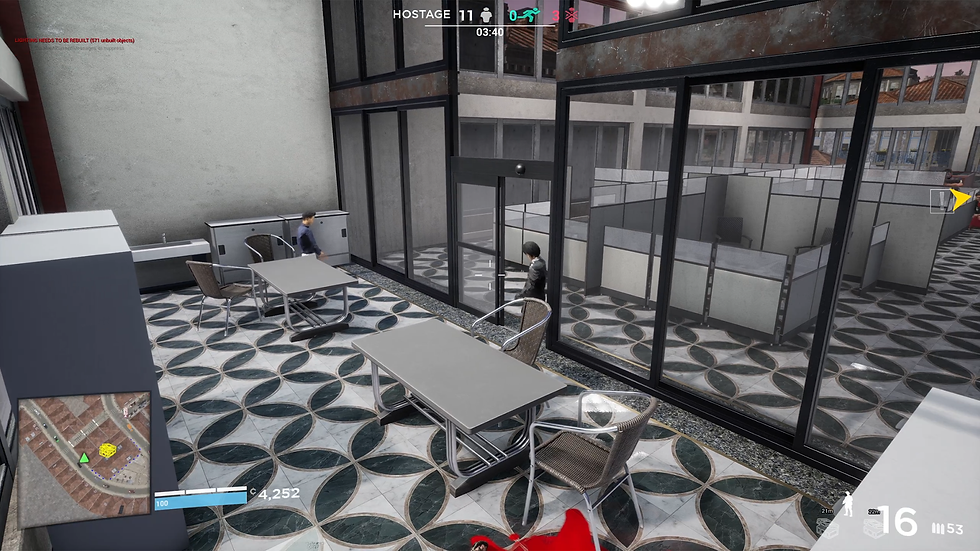
This was the first interior building I was tasked to create, taking place on the east side of the city it was a near some of the biggest landmarks, making it a hotspot.
My intentions for the interior was to keep it simple but create something unique enough to have some interesting fire fights within. That being said, I didn't want the layout to be complex, and I wanted all the area's easily accessible, because AI was ruthless in smaller spaces. I also wanted the space to represent a normal modern bank, but if you looked closely it would appear to be a weird private banking gig ran by the gangs of the city.
APPROACH
I needed to make the bank accessible from both the lower street on the first floor, and the higher street on the second floor which was important for gameplay so players didnt feel stuck during a mission indoors. That being said, I made the first floor the main lobby with some cubicles, and the second floor as another area for additional customer service, topping it off with the managers office overlooking the street. Both sides of the second floor have stairwells that can access the third floor, which contains an accounting area and a lunch room.
To make the interior seem like it was ran by a gang, but also seem normal, I put guns and stacks of money in hidden areas, and I made comedic ads for the walls that pretty much explained how the gang was going to keep your money and spend it for themself.
I was currently in the process of coming back to this interior and improving it, since it was my first interior I wanted to make it better after learning some new and improved skills.
CHALLENGES
Challenges for this interior was that it was my first big task on this game, so I was learning the pipeline, learning the tools, and trying to be as creative as possible. Each area I made got better and better, so I made it a goal for myself to come back and improve the interior when I had more time.
Another challange was the area it was in, I was building it from a base of a modular building kit, meaning the scale was never to a perfect grid, on level ground, or a perfect shape. Because of the slant on the environment going from a lower street to a higher street, the rear door had to be on the second floor, making designing the layout tough at first. I solved this by using some wider stairs and leaving the very back of the cubicles on the first floor open so the player could quickly grab some cover if trapped in the back of the first floor. I also made floors above the main lobby easily accessible through the stairwells or elevator.
ADDITIONAL AREAS

with mission active

with mission NOT active
1/42
BACKSTORY & INTENT
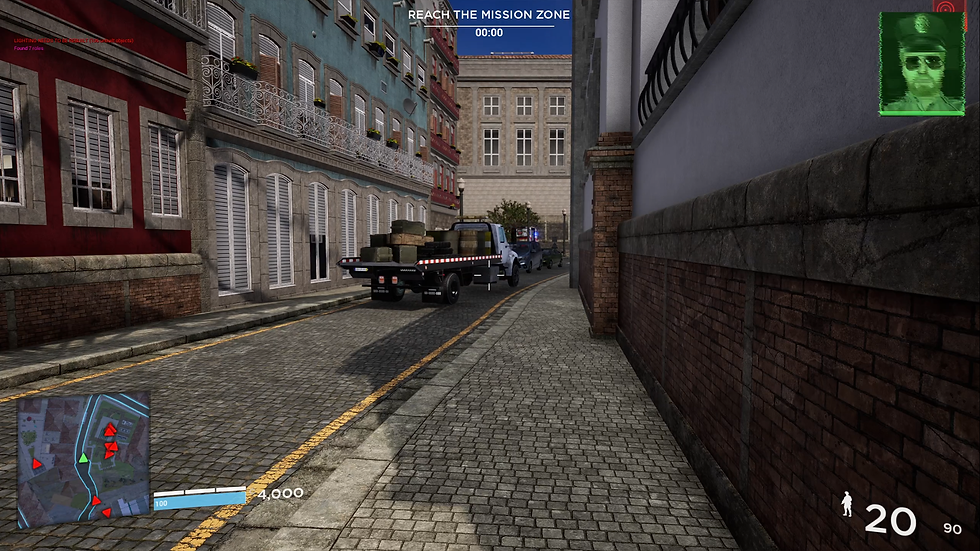
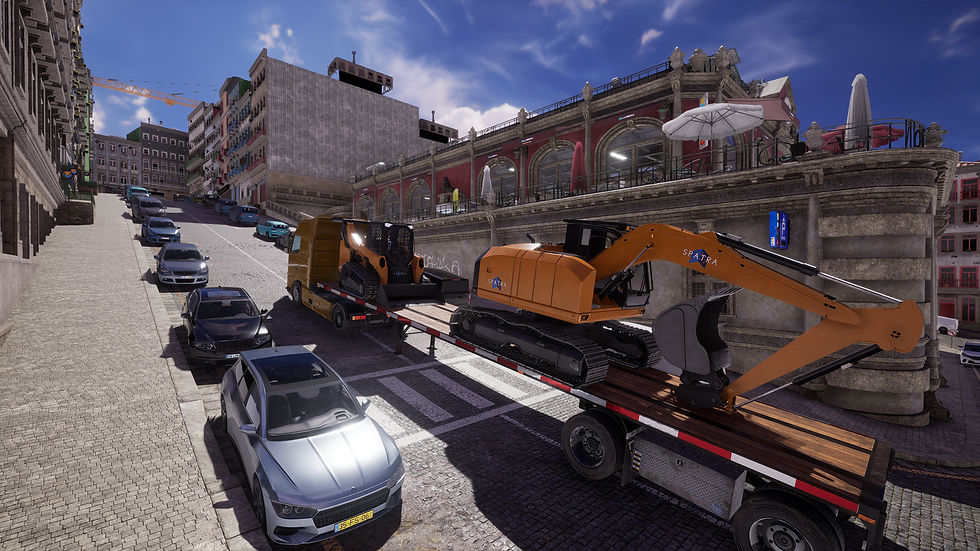
Additional areas consist of everything I did outside of interior work, my tasks were to build out missions taking place in the streets. Because we had nice tools for placing mission actors I was able to build out smaller mission's a day or less, and if we had to iterate on anything, our mission actor blueprints were very easy to modify.
My Intent for missions that took place in the streets was to best guide the player through the mission using level design, and placement of objects within those mission levels.
We intended every mission, to have gameplay at the top of our priority over the area "making sense," from an aesthetic point of view. But I always tried my best to find a happy medium between the two.
APPROACH
I was needing to design and create an assortment of missions throughout the city, essentially whenever I had extra time, I was supposed to fill in empty areas of the city with new and unique missions.
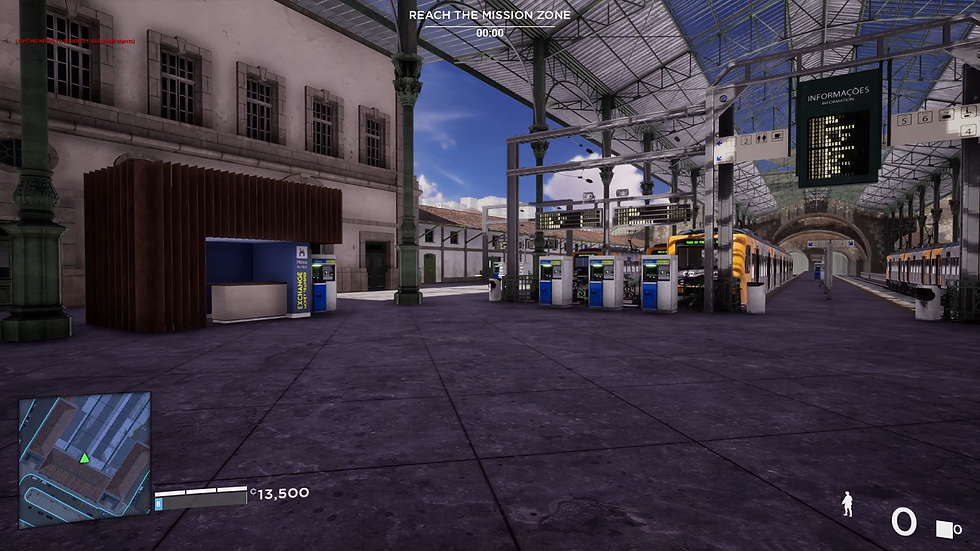
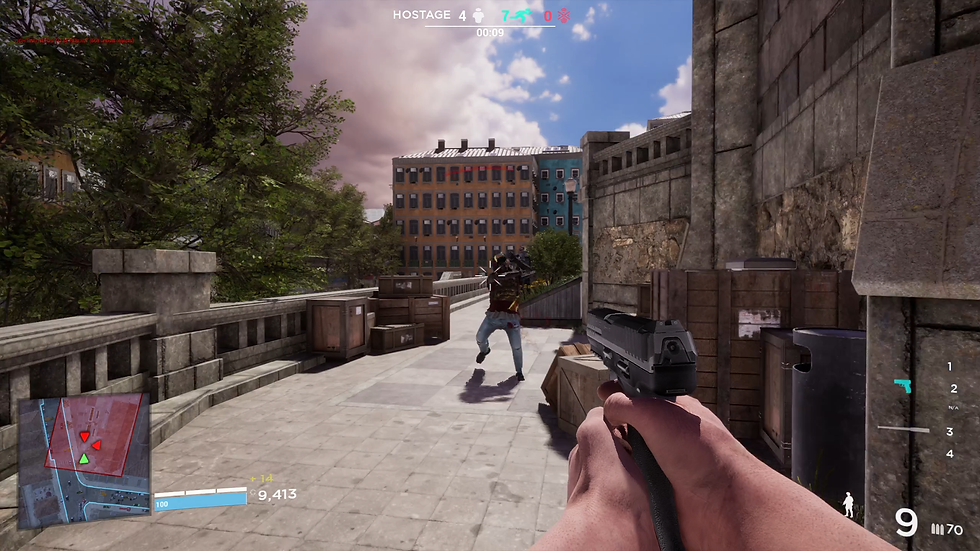
My main approach was using an assortment of vehicles, crates, construction equipment, etc. in order to direct and guide the player in the direction of the active mission. VIP Escort missions would take place down multiple streets and areas, making it a bit more time consuming when set dressing those missions as the areas were larger. Other missions like Bomb Defuse or Cash Protecting would be more secluded to a specific area. This made the area to set dress a lot smaller, and speeding up the overall creation of the mission/level.
We needed an assortment of all these types of missions as they were randomly chosen once your current mission is complete. This meant we needed options in every area so the players wouldn't have to travel across the universe to get to their next mission. Overall, I tried to connect these missions as best as I could, having VIP Escort mission lead the players closer to other missions in more secluded areas. Overall this gave players lots of variety and a new type of mission all the time.
CHALLENGES
Challenges that came up when creating missions in the streets, and outdoors, was trying to figure out the best path to take the player. We never wanted the game to be easy, but it had to be beatable, and provide an immense fun factor during a mission, and on the way to new missions. So, balancing the amount of enemies in each area and/or each part of the mission was needed, and required a lot of testing and iteration. Another challenge with this is that it was a co-operative multiplayer game, and we had a smaller team. I had to find other available people at times to be able to test missions with, to make sure the missions were balanced for solo players but also a squad of players. Co-op games are much more fun with friends, so making sure each mission was not too easy with a squad, but beatable as a solo, was very important to me, the amount of enemies, bombs, hostages, cash locations to protect, and placement of escort checkpoints, were critical for balancing and flow of a mission.
CONCLUSION
To conclude, I would like to share some of the other areas I was working on for missions. Overall, the team was amazing to work with, always willing to help, and always made work never seem like work. If we ever have the chance to continue the development of this project, or work together again, I'm sure we would all have no problem dedicating our time and passion together.
Aside from all the project classifications, I gained an enormous amount of technical knowledge and experience that so far remains my proudest achievement. My Creative Director was always there to guide me in the right way, and always reminded me how much he loved my work ethic, and ability to challenge myself to take on any task. This project has solitified my passion for design and technical work within game development. Being in many work industries before this, it was hard to find something that I really loved. Working on this project has made it clear to me that this is what I want to do, and continue creating more powerful, immersive and engaging experiences, and continue to grow, in life and as a game designer.

with mission active
with mission NOT active
with mission active
1/21
bottom of page